Sep 102015
 

Hugo Brehme was born in Eisenach, Germany, 3 December 1882, and died on 13 June 1954 as a result of an auto accident in Mexico City. Brehme certainly visited and photographed Lake Chapala on more than one occasion. Images of the lake and its environs appear in his work from around 1920.
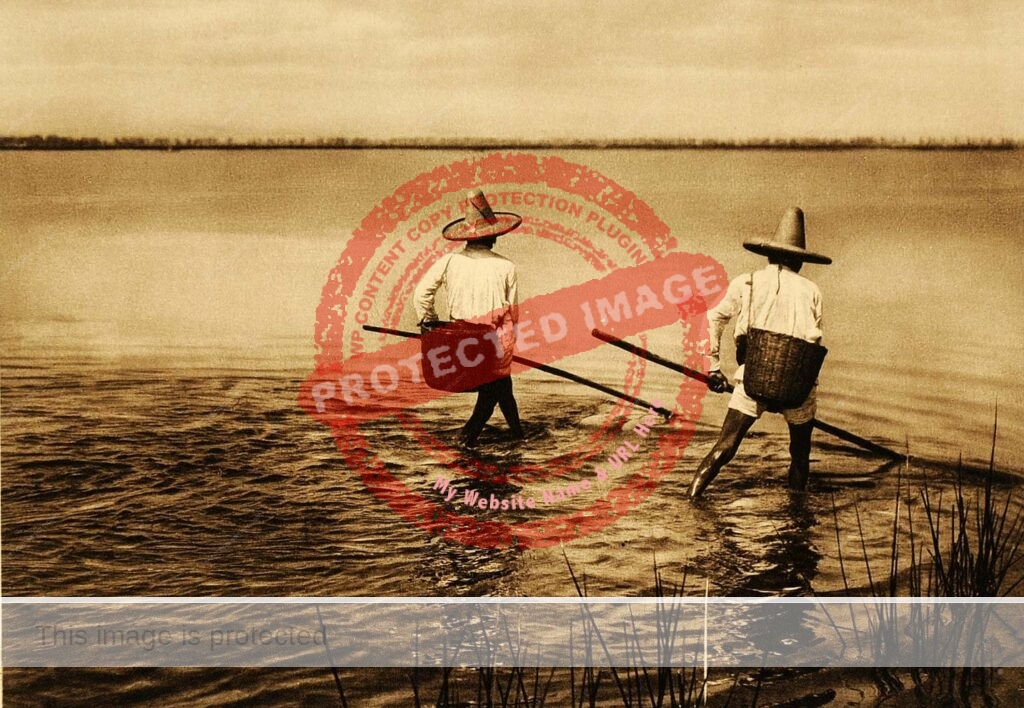
Hugo Brehme: Fishermen in Lake Chapala. ca 1925.

Often cited as Hugo Brehme, Fishermen in Lake Chapala, c 1925, this photo dates from 1907 and was the work of Sumner W Matteson (see comments)

Brehme studied photography in Erfurt, completing his studies in 1902, and then opened his own studio. He took several trips to the then-German colonies in Africa.

He first visited Mexico in 1906, strongly influenced by having read Mexiko: Eine Reise Durch das Land der Azteken (“Mexico, a journey through the land of the Aztecs“) by Oswald Schroeder (published in Leipzig 1905).

On 14 August 1906, Brehme, then 23 years old, left Hamburg for Veracruz, Mexico, on board the SS Fürst Bismarck, traveling 3rd class. The ship called in at Dover (U.K.), Le Havre (France), Santander (Spain), A Coruña (Portugal) and Cuba, en route to Mexico.

He clearly liked what he found in Mexico, and saw a future there, since he returned to Germany, married his sweetheart Auguste Hartmann, and soon afterwards, in August 1908, the couple were on their way back there. They traveled on the SS Kronprinzessin Cecilie, but this time in the relative luxury of 2nd class!

By 1910, Brehme had a studio in Mexico City and rapidly gained popularity among the wealthier residents. The following year, he joined Casasola’s Agencia Fotográfica Mexicana. He documented many of the key events of the Mexican Revolution (1910-20),  including the Decena Trágica of 1913, Emiliano Zapata’s activities in Morelos, and the 1914 U.S. intervention in Veracruz.

Brehme quickly established himself as an outstanding commercial photographer, specializing in black-and-white postcard views. For more than 40 years, he roamed the country, using excellent photographic technique and composition to capture all manner of scenes. Some of his images are hauntingly beautiful, reminding us of a bygone age that we can never hope to regain.

The 1927 edition of Terry’s Guide to Mexico recommends Brehme as having “the largest, most complete and most beautiful collection of artistic photographs (views, types, churches, etc.) in Mexico.”

Brehme’s best-known photographic book is México pintoresco (“Picturesque Mexico”) which was published in 1923. A second volume Picturesque Mexico: The Country, The People and The Architecture appeared in 1925 (in English, French and German). These are among the masterpieces in the history of photography in Mexico.
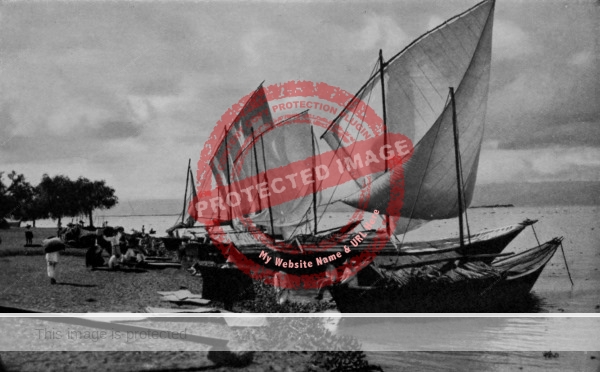
Hog Brehme. Boats at Lake Chapala.

Hugo Brehme. Boats at Lake Chapala. ca 1925?. (From Marian Storm’s Prologue To Mexico)

Brehme, who is also credited with having introduced the first photographic Christmas cards into Mexico, was granted Mexican citizenship shortly before his death. His son Arno, born in Mexico in 1914, also became a photographer and worked in his father’s studio. Of the relatively small number of photos attributed to Arno (Armando Brehme), perhaps the most interesting are those of the eruption of Paricutin Volcano in 1943.

There is no question that some images signed by Brehme were actually taken by other photographers, and there are doubts about others. For example, see this analysis (in Spanish) of some of his photos. Equally, there is no doubt that many Brehme photos were used, without adequate attribution, by other authors.

These issues aside, Brehme was clearly a master of publicity, and helped to foment an interest in Mexico, and travel in Mexico, that extended far beyond its borders.

Lake Chapala Artists & Authors is reader-supported. Purchases made via links on our site may, at no cost to you, earn us an affiliate commission. Learn more.

My 2022 book Lake Chapala: A Postcard History uses reproductions of more than 150 vintage postcards to tell the incredible story of how Lake Chapala became an international tourist and retirement center.

Sources:

Comments, corrections or additional material welcome, whether via email or comments feature.
Jun 222015
 

Poet, writer and politician Honorato Barrera Buenrostro was born in the Lakeside town of Jamay (mid-way between Ocotlán and La Barca) in 1870 and died in Ocotlán in 1952.

He left his home town for Mexico City at a young age. In Mexico City, he studied and wrote alongside Amado Nervo (1870-1919) and Luis Gonzaga Urbina (1864-1934). Coincidentally, Urbina’s own collection of poetry, Puestas de sol, includes “El poema del lago” (“The Lake Poem”), a lengthy poem inspired by a visit to Chapala. Barrera Buenrostro was also a good friend of the poet and novelist Rubén M. Campos, who had many links to Chapala.

Barrera Buenrostro subsequently returned to Ocotlán where he worked in commerce and as a telegraphist for the railway company. He later moved to Chapala, and was the Mayor (Presidente Municipal) of Chapala in 1924, during the time when Lic. José Guadalupe Zuno was the state governor (1923-1926).

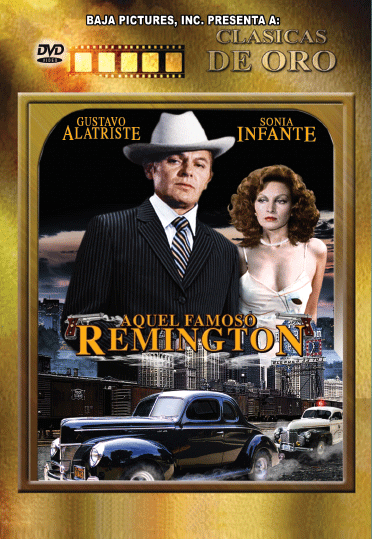
aquel-famoso-remingtonBarrera Buenrostro’s work won various literary prizes, including ones awarded in Aguascalientes, Morelia and Mexico City. His best known works are a book of poems, Andamio de Marfíl (1947), and a novel, El rémington sin funda (1947).

The novel El rémington sin funda (1947) is based on the life of Rodolfo Álvarez del Castillo. Nicknamed “El Remington”, Álvarez del Castillo was a famous pistol-packing womanizer of the 1930s, who eventually fought a duel with a soldier in which both men lost their lives. Álvarez del Castillo’s life story became the basis for at least two Mexican films: ¡Se la llevó el Rémington! (1948), starring charro singer Luis Aguilar, and Aquel famoso Remington (1982), directed by Gustavo Alatriste.

Sombrero Books welcomes comments, corrections or additional material related to any of the writers and artists featured in our series of mini-bios. Please use the comments feature at the bottom of individual posts, or email us.

Nov 202014
 

Frederick (sometimes Federico/Fritz/Fredrick/Friedrich) Wilhelm Butterlin was born in Cologne, Germany, 30 November 1904, and was the middle of three brothers (Otto was older, Ernesto younger). He died in Tlajamulco de Zuñiga on 27 December 1981; his remains rest in the municipal cemetery.

Frederick was a well-known photographer and seems to have been the owner of what was almost certainly one of the first art galleries in Ajijic.

Frederick had not yet celebrated his third birthday when his parents brought him to Mexico in 1907. The family had a first class cabin on the “Fürst Bismarck” of the Hamburg-America line, which departed Hamburg on 14 October 1907 for Veracruz, via Southampton, Santander, Coruna and Cuba. The passenger list duly records the ages of each of the family members. Frederick was 2 years and 9 months of age, his older brother Otto was 6 years and 6 months. Their father Hans Butterlin was 37 and his wife Amelie 26. The family settled in Guadalajara but so far I have been able to find out nothing of substance about their whereabouts during the next twenty years which includes the Mexican Revolution.

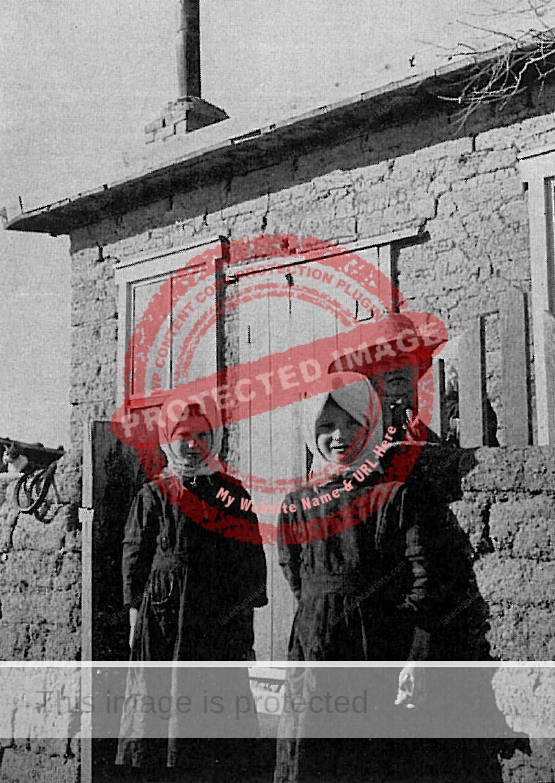
Girls belonging to the Old Colony (Saskatchewan) Mennonites moving to Mexico. Photo by Frederick Butterlin ca 1948

Girls belonging to the Old Colony (Saskatchewan) Mennonites moving to Mexico. Photo by Frederick Butterlin ca 1948

What is known is that in 1929, Frederick was a witness to his older brother Otto Butterlin’s marriage in California. In the 1930 U.S. census, Frederick W. is listed as 25 years old, single, and is said to have immigrated to the U.S. in about 1920. His occupation is listed as “sugar operator”. It is unclear how long Frederick remained in the U.S. but by 1934, he had become a noteworthy photographer.

Among other achievements as a photographer, he contributed to the Amateur Competitions in the January 1934 and February 1934 issues of Camera Craft, (A Photographic Monthly). He was also active as a photographer in Mexico, though precise dates are lacking. For example he is mentioned (albeit with an incorrect nationality) in Olivier Debroise’s Mexican Suite: A History of Photography in Mexico (University of Texas, 2001): “Perhaps the most interesting contributor to Foto was the Frenchman F.W. Butterlin, another devotee of pictorismo (as he called it), whose interesting composition entitled “Railroad Wheels” recalls the early work of Paul Strand.” (p 65).

In November 1935, “Fritz Butterlin” gave a keynote address on pictorial art in photography, based on observations made on “his long trips”, at the Club Literario de Inglés in Guadalajara.

In 1936, Frederick, then aged 32, married 26-year-old Bertha Eimbcke Ferreira from Mazatlan, Sinaloa. She was a languages teacher, and was president of the Mexican Association of English Teachers from 1963 until at least 1971.

Frederick seems to have continued his photographic career for several decades. His published photos include some evocative portrait photographs of Mennonites in Mexico published in the Mennonite Life editions of October 1949 and January 1952.

In 1956, Butterlin, working for “Exclusivas Jimenez SA de CV” placed a series of advertisements in El Informador recommending the use of “ADOX” film for photography.

In earlier adverts in the same daily (eg 27 February 1951), “Federico W. Butterlin” was offering his services as a translator (English, German, French, Spanish) of all kinds of books, brochures, manuals, letters, etc., so it appears that photography alone was never lucrative enough to satisfy his financial needs.

There are also references to Frederick having owned one of the earliest galleries in Ajijic in the 1940s. According to Michael Hargraves in his 1992 booklet “Lake Chapala: A Literary Survey”, “Frederick owned the first restaurant and gallery in Ajijic in the 1940s, and was a painter in the classical style.” Hargraves appears to be misidentifying the photographer brother, Frederick, with his elder brother Otto, who was indeed a well-known painter.

[Last update: 1 May 2016 – This profile is overdue for an update]

Acknowledgment

My sincere thanks to Iván González Barón (see comments) and his family for graciously sharing significant additional material relating to Frederich Butterlin. This profile will be updated in due course.

As always, we would love to receive any comments, corrections or additional information.

Related posts:

Nov 132014
 

Han(n)s Otto Butterlin (or Otto Butterlin as he was usually known, at least in Mexico) was born in Cologne, Germany, 26 Dec 1900 and became an abstract and impressionist painter of some renown.

He was the oldest of the three Butterlin brothers. Otto moved with his middle brother Frederick and their parents (Johannes and Amelie) from Germany to Mexico in 1907. (Otto’s youngest brother Ernesto would be born a decade later in Guadalajara.)

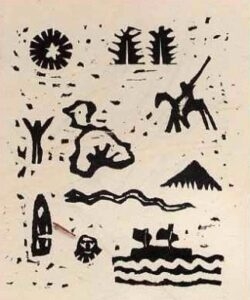
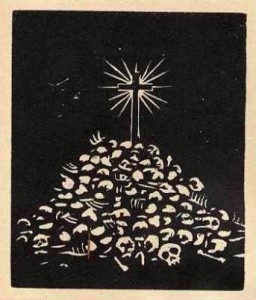
Woodcut by Hanns Otto Butterlin, Ixtaccihuatl (1921)

Woodcut by Hanns Otto Butterlin, Ixtaccihuatl (1921)

U.S. immigration records show that Otto Butterlin (5’9″ tall with blond hair and blue eyes) was resident there between August 1924 and October 1929, though he probably made trips to visit family in Mexico during that time.

Otto made his living as a chemist and supervisor of operations in various industrial plants for at least 15 years. At the time of the 1930 Mexican census (held on 15 May), he and his wife were living in Los Mochis, Sinaloa, where he was working at the sugar refinery.

The following year, in 1931 Margaret gave birth to their daughter Rita Elaine in Los Mochis. Rita went on to marry four times. Her first marriage (1951-58) was to one of Otto’s friends – textile artist and silkscreen innovator Jim Tillett (1913-1996) – and her second (1959-1963) to Chilean film star Octavio Señoret Guevara (1924-1990). She was subsequently briefly married (1967-69) to Haskel Bratter, before falling in love with and marrying (1971-his passing) Howard Perkins Taylor (1916-1993).

Woodcut by Hanns Otto Butterlin, Ixtaccihuatl (1921)

Woodcut by Hanns Otto Butterlin, Ixtaccihuatl (1921)

While Rita was still an infant, Otto decided to formalize his permanent right to residence in Mexico and became a naturalized Mexican citizen in October 1935. Immigration records show that he continued to visit the U.S. several times a year.

It appears to be at about this time that Otto decided to spend more time on his art.

By the early 1940s, Otto Butterlin was based in Mexico City and working as an executive in the Bayer chemical company, a position which enabled him to supply several well-known artists of the time, such as A. Amador Lugo (who was epileptic) with needed medications, at a time when they were very hard to obtain.

During this period, Butterlin taught art with, or to, numerous well-known Mexican artists, including Diego Rivera, Ricardo Martinez, José Chávez Morado, Ricardo Martínez and Gunther Gerzso.

Butterlin-Hanns-Otto-The-Funeral-ca1942

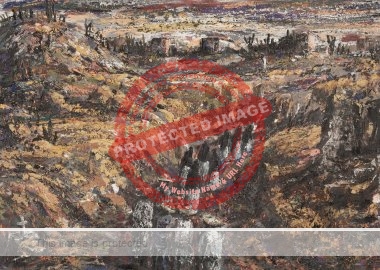
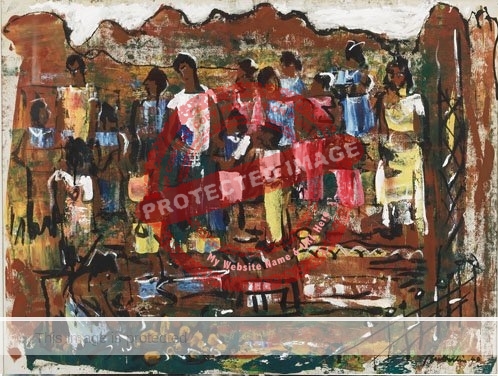
Hanns Otto Butterlin. The Funeral (ca 1942)

In September 1945, Otto and his wife Peggy, together with daughter Rita, relocated to live in Ajijic. In a 1945 article, Neill James, who had arrived in Ajijic a couple of years earlier, described Otto Butterlin as a “well known expressionist and abstract painter who owns a huerta in Ajijic where he lives with his wife, Peggy, and daughter, Rita.”

Otto Butterlin: Modern Figure Study. 1949

Otto Butterlin: Modern Figure Study. 1949

The group of artists exhibiting watercolors in May 1954 in “Galería Arturo Pani D.” in Calle Niza in Mexico City includes a Butterlin (probably Otto) alongside such famous contemporary artists as Raúl Anguiano, Fererico Cantú, Leonora Carrington, Carlos Mérida, Roberto Montenegro, Juan Soriano, Rufino Tamayo and Alfredo Zalce.

Otto Butterlin died in Ajijic on 2 April 1956.

Note (April 2016): We thank the Registro Civil in Chapala which kindly emailed us a copy of the official death certificate of Otto Butterlin.

This is an outline profile. Contact us if you would like to learn more about this particular artist or have information to share.

Partial list of sources:

  • Monica Señoret (Otto Butterlin’s granddaughter), personal communications via email. April 2015.
  • María Cristina Hernández Escobar. “Gunther Gerzso, The Appearance of the Invisible”. Voices of Mexico. UNAM. n.d. [formerly at http://www.revistascisan.unam.mx/Voices/pdfs/5323.pdf]
  • Robert L. Pincus, “WPA captures the soul of a nation”, The San Diego Union-Tribune, 5 February 2006, page F-1.
  • Robert Hilton (ed). Who’s Who In Latin America A Biographical Dictionary of Notable Living Men and Women Of Latin America. Part I – Mexico. (1946)

As always, we would love to receive any comments, corrections or additional information.

Related posts:

Nov 062014
 

While researching the history of the artists associated with the Lake Chapala region, I came across more and more references to the “two Butterlin brothers”. The problem was that different sources, including otherwise reputable art history sites, gave them quite different first names: Ernesto and Hans? Hans and Frederick? Linares and Otto?

There was very little evidence and it seemed impossible to tell which source was accurate, and why different accounts gave such different names, ages and details. They were usually described as “German”, but it was unclear whether they had been born in Germany or were the sons of German immigrants to Mexico.

Eventually, I compiled enough evidence to prove conclusively that there were not two Butterlin brothers, but three! Two had been born in Germany and were brought by their parents to Mexico. Safely ensconced in Guadalajara, the parents then had a third son, several years younger than his siblings.

The picture was complicated by the fact that two of the brothers used different names at different stages of their life, with the older brother rarely using his first name on his art once he arrived in Mexico, while the youngest brother adopted a surname for much of his artistic career that had no obvious connection to his family name.

Small wonder, then, that confusion reigned about the Butterlin brothers on many art history sites, some of which even failed to identify correctly the country of birth of each of the three brothers.

The three brothers (in order of birth) are:

There are still great gaps in my knowledge of this family, but the picture that finally began to emerge showed that the Butterlins deserved wider recognition as an artistic family of some consequence.

In future posts, I will show how all three Butterlin brothers contributed significantly to the development of the artist colony in the Lake Chapala area, albeit it in rather different ways.